Hedge Trimming in Herne Hill

Keep hedges in shape with hedge trimming in Herne Hill, delivered as a practical garden service for homes, shared properties and managed outdoor spaces. The work is centered on steady reduction, clear lines and sensible maintenance rather than overcutting, so the hedge keeps a healthy structure while looking neat from the street, path or garden side. We handle routine trims, height and width reduction, and careful finishing for hedges that have grown unevenly over time.
Our approach is suitable for clipped boundary hedges, softer screening hedges and mixed planting where a controlled finish matters. In many gardens, the useful result is not just a tidy outline but a hedge that still provides privacy, shelter and definition. If you want a considered way to keep growth manageable through the year, our trimming service is designed to support that balance. You can request a quotation once you know the scale of the job and the kind of finish you want.
For a clearer view of what we do, the services overview sets out the main garden work we offer, while this page focuses on hedge trimming and the practical decisions that help it go well. If your garden also needs additional outdoor maintenance, those details can be discussed alongside the hedge work so the scope is defined properly from the outset.
Trim Styles and Hedge Shapes
Different hedges suit different finishes, and the right trim depends on the species, height, density and the shape you want to keep. Some hedges benefit from a crisp rectangular profile, while others look better with a softer taper that allows more light to the lower growth. We trim with the hedge’s natural habit in mind, aiming for a result that looks intentional rather than forced. That matters when a hedge forms the edge of a front garden, frames a terrace or sits near a shared boundary where a smart appearance is visible every day.
Where a hedge has started to lean, bulge or thin at one end, trimming can be used to restore a more even line. It may also be the right time to reduce spread where branches are intruding on paths, driveways or planting beds. In those cases, a careful cut is often better than a heavy reduction, because excessive removal can leave a hedge sparse. The aim is to keep usable density while bringing the growth back under control.
Useful points to consider before a trim include:
- the hedge’s current height and width
- whether you want a formal or natural outline
- access along the front, side or rear of the hedge
- how close the hedge is to fences, walls or other planting
- whether cuttings need to be cleared away as part of the work
Maintenance Trimming Through the Seasons
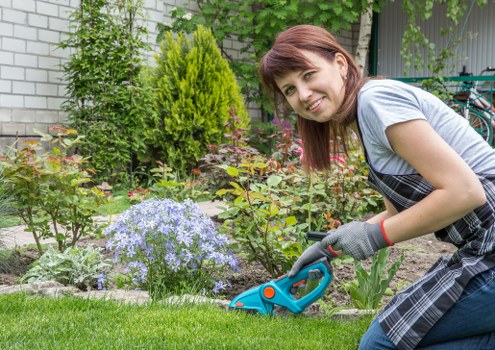
Regular hedge trimming is often the simplest way to avoid a difficult cut later in the year. When a hedge is maintained at sensible intervals, the work is usually more controlled and the finish is more even. That can be useful for gardens where the hedge is part of the overall structure, such as a boundary line, a screen between spaces or a backdrop to borders and lawn areas. Ongoing trimming also helps prevent the hedge from becoming top-heavy, which can make future maintenance more awkward.
Seasonal timing matters, because the best approach depends on the hedge type and the stage of growth. Some hedges are best clipped to maintain a neat surface as new growth emerges, while others need a more measured schedule so they are not cut back too hard. We can work with routine maintenance or a one-off tidy, depending on what the hedge needs. If you are comparing options, the garden maintenance page gives a broader view of the kinds of ongoing care that can sit alongside trimming.
Good maintenance trimming is usually about making small, regular corrections rather than letting the hedge become overgrown and then trying to recover it in one cut. That approach supports a tidier finish, keeps the outline predictable and reduces the chance of uneven regrowth. It also makes it easier to keep the hedge at a practical size for day-to-day use of the garden.
Managing Overgrowth and Uneven Growth
When hedges have been left for a while, they can develop problems that are not obvious from a distance. The top may widen faster than the sides, the base may become shaded, or one section may grow more vigorously than another. A trimming visit can address those issues by reshaping the hedge, easing back overhang and bringing the line into better proportion. That is particularly helpful when the hedge has begun to narrow a path, interfere with sight lines or press into nearby planting.
More substantial hedges may need a staged approach, especially where a severe reduction would leave too much bare wood. In those situations, the finish is often improved by taking a steady approach that supports future regrowth rather than forcing an immediate dramatic change. The right level of cutting depends on what the hedge can handle, so the work is planned around the hedge’s condition instead of applying a single method to every garden. For larger outdoor reshaping, our landscape gardening work may also be relevant when the hedge is part of a wider change to the space.
We take particular care where hedges are near fences, gates, paving or brickwork, because uneven access or close boundaries can make trimming more awkward. The finish should look clean from both sides where possible, and any cut material should be handled so the garden is left in a usable state. That practical detail matters as much as the final outline.
Hedges, Screens and Boundary Lines
Many customers want hedge trimming that does more than improve appearance. A hedge can act as a privacy screen, soften a boundary or create a clear edge between parts of a property. Trimming helps maintain those roles without allowing the hedge to become too heavy or misshapen. Where the hedge forms a boundary with neighbours or shared access, a tidy and consistent line can also make everyday use of the space feel more orderly and easier to maintain.
We can shape boundary hedges so they remain visually balanced across their full length, including sections that receive different amounts of light. In some gardens, one part of a hedge may be denser or taller because it grows beside a wall, patio or shaded corner. A careful trim helps even out those differences. If the hedge is being managed as part of a wider garden job, it may be sensible to combine it with other tasks already listed on the garden clearance page when there is also excess cut growth or general tidying to be carried out.
For properties with a stronger decorative edge, trimming can be used to support a cleaner visual rhythm across the frontage. For more functional hedges, the priority may be plain containment and access. Either way, the work should suit the hedge’s purpose rather than treating every plant as if it needs the same finish. That is one reason a proper quotation is useful: it helps define the expected shape, the amount of reduction and any clearance work that needs to be included.
What Affects the Quotation
Pricing for hedge trimming usually depends on a handful of practical factors. Height, length, thickness and access all influence how long the job will take and what equipment or cutting method is needed. A low hedge along an open border is not the same as a tall, dense hedge with awkward access and nearby structures. The condition of the hedge also matters, because a routine maintenance trim is generally different from work on long-untrimmed growth that needs careful restoration.
It is useful to be clear about the result you want. A light tidy, a controlled reduction or a more defined shape each involves different levels of cutting. If you also want the clippings removed, that should be included in the enquiry so the quotation reflects the full scope. To help make the process straightforward, the pricing and quotes page sets out the route to getting a figure for the work. Please ask for a quotation when you are ready to compare the hedge’s current size with the finish you want.
Before that, a few details are often enough to start the discussion: the hedge’s approximate length, whether both sides need attention, whether there is limited access and whether the work is a one-off cut or part of regular upkeep. That information helps the scope stay accurate without turning the enquiry into a long task. A concise description is usually enough to move things forward sensibly.
Other Garden Work Alongside Hedge Trimming
Hedge trimming often sits naturally alongside other garden tasks, especially where the hedge is only one part of a larger outdoor maintenance plan. A tidy hedge can make surrounding features easier to manage, and in many gardens the finish looks better when the boundary, lawn and planted areas are considered together. Where suitable, we can look at the hedge as part of the wider space rather than as an isolated feature with no connection to the rest of the garden.
That can include work such as lawn care, general tidying and light reshaping of surrounding planting. If the garden needs a broader refresh, the lawn mowing page covers one of the most common companion services, while the services overview can help you see how the different garden tasks fit together. Keeping these elements aligned may give a more coherent result than tackling each one months apart.
Where the hedge is being cut back because a larger area has become untidy, it is sensible to decide which parts of the job are essential and which can wait. That keeps the work focused and avoids unnecessary cutting. It also helps make sure the quotation reflects the actual work to be done, not a guessed bundle of unrelated tasks. If you want to combine services, just make the scope clear from the start.
About Herne Hill
Herne Hill is an area in south London known for its mix of residential streets, open spaces and transport links across the boundary of the London Boroughs of Southwark and Lambeth. It takes its name from the hill around which the district developed, and its local character is shaped by Victorian and Edwardian housing, tree-lined roads and a town-centre stretch around the railway station. The station itself, on Railton Road, has long been a recognisable focal point for the area and connects Herne Hill with central London and surrounding districts. One of the best-known landmarks nearby is Brockwell Park, a large public park that gives the district a strong green edge and a wide open space for walking, recreation and seasonal events. The park includes Brockwell Hall, a Grade II*-listed building set within landscaped grounds, and the surrounding area has a well-established pattern of terraces, maisonettes and converted houses. Herne Hill also has a distinct local centre with shops, cafés and everyday services clustered near the station, while nearby streets retain a quieter residential feel. The district’s street layout and architectural variety reflect its development over time, with later infill beside older housing, and that blend gives the area a layered urban character. On the western side, routes lead towards Brixton, while the eastern side connects towards Dulwich and other parts of south London. The area is also associated with the long-running Herne Hill Velodrome, a significant cycling venue with a strong sporting presence. Together, these features make Herne Hill a place where parks, transport, housing and local amenities sit closely together in a compact urban landscape.
Shaping Hedges for Front Gardens and Rear Boundaries

Front-garden hedges often need a different finish from those at the rear of a property. The front usually calls for cleaner lines and a profile that looks good from the pavement or driveway, while rear hedges may be managed more for privacy and comfort. We trim with those differences in mind, making sure the hedge suits its setting instead of being cut into a shape that works badly for the space. That practical distinction can make the final result feel much more settled.
Where hedges meet driveways, gates or narrow paths, the cut needs to preserve clearance without creating a harsh or uneven edge. In enclosed rear gardens, the emphasis may be more on controlling spread and keeping light where it is needed. If the hedge is part of a more substantial outdoor redesign, the landscaping page may be useful for broader structural work beyond trimming. If the boundary plants are mature and need more than shaping, we can discuss the level of intervention carefully.
Well-judged trimming should leave the hedge looking deliberate, not simply shorter. That means considering line, proportion and regrowth, then adjusting the cut accordingly. A hedge that is clipped too aggressively can become thin or uneven, whereas a measured trim supports both appearance and future health. The most useful result is usually the one that keeps the hedge manageable without making it look stripped.
Preparing for the Work and Requesting a Quote
A good quotation starts with a straightforward description of the hedge and the result you want. If you can note the hedge’s approximate length, height and access points, it becomes easier to understand whether the job is a quick maintenance trim or a more involved reshaping. It also helps to mention whether the cuttings should be removed, whether only one side needs attention and whether the hedge is part of a shared boundary. These details are usually enough to frame the work accurately.
There is no need to overcomplicate the request. A few clear facts and a short explanation of the finish you want will usually do the job. If you are unsure how much reduction is sensible, say so and describe the current condition instead. For any practical questions about the enquiry process, the contact us page is the place to start, and the final step is simple: request a quotation when you are ready.
We aim to keep the conversation focused on the hedge itself, the amount of cutting needed and any extra clearing that should be included. That makes it easier to agree a realistic scope and avoid confusion later. If your garden needs more than one type of work, mention that at the same time so the quotation can reflect the full task rather than just the trimming on its own.
Cutting Back, Clearing and Finishing Details

Once the hedge has been trimmed, the finishing details matter. Clippings need handling, loose growth should be gathered, and the edge should be left neat where the hedge meets lawn, paving or planted borders. The standard of the finish can be judged just as much by those final steps as by the cutting itself. A careful tidy-up helps the garden feel ready to use again and prevents scattered cuttings from blurring the effect of the trim.
Some hedges also benefit from a little extra attention after the main cut, such as correcting a section that has outgrown the rest or refining a corner that had previously been missed. Where branches are thicker or growth is particularly dense, the work may need more patient cutting to keep the finish even. Our focus is always on a tidy, controlled result that suits the hedge’s condition rather than on rushing the job. If related garden waste needs to be taken away, that can be included in the scope.
For broader support with outdoor upkeep, the about us page gives a general company introduction, while the practical route to getting started remains the same: tell us what hedge you need trimmed, say what kind of finish you want and ask for a quotation. That is the simplest way to move from an overgrown line to a clearer, more manageable hedge.